Route Analysis
The movements of your visitors provide information about whether shop areas are optimally designed and how visitors behave when browsing until they make a possible purchase. Hotspots, complete paths and KPIs can be generated in individually definable zones.
A professional route analysis provides information about the main customer routes and their frequency in a sales area. This allows retailers to identify which shelves, shelf rows and sales areas are particularly weak or strong in terms of visitor traffic.
Based on a walking route analysis, retailers can draw conclusions as to whether the shop design is optimal or whether there is still potential for visitor-oriented improvement. The improvements can contribute to a longer dwell time and lead to higher sales per customer. We are happy to advise you independently of manufacturers on this modern visitor analysis and the technologies and systems that can be used.
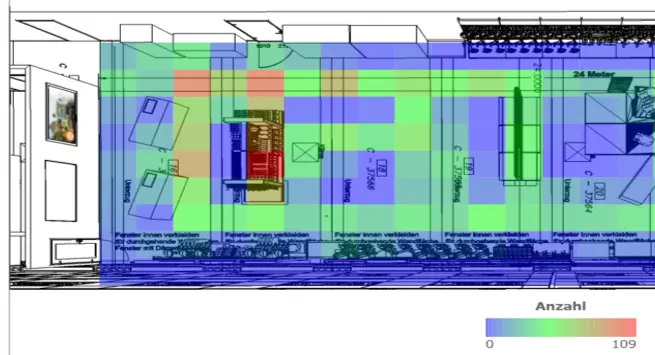
Evaluate walking routes and dwell times down to the square metre level
- Data-based heat maps for all area sizes
- Detect Hotspots / Cold spots
- Variable data evaluations: heat maps, tables, graphics
- No on-site server hardware required
- 100 % GDPR-compliant
- In combination with the retail analytics data, you will receive additional key figures for your in-store tracking.
Analysing visitor movement patterns
A walking route analysis helps companies optimise their existing retail space. The shop design and spatial customer guidance predetermine customer walking routes in a certain way. Furthermore, the architectural conditions offer several options for the layout of the sales area, making data important for validating decisions. No shop design should be set in stone, because visitors' needs change from time to time. With a systematic walkway analysis, retailers can keep track of changes in their visitors' behaviour and walkways.
The results of the customer flow analysis form the basis for further optimisation of the store layout. This enables retailers to identify primary and secondary customer flow paths, locate areas of the store that may be negatively impacting sales, and determine whether customer behaviour varies between different branches. This gives retailers deeper insight into what is actually happening on their sales floors.
If you not only know which products have been sold or transported via the conveyor belt, but also what happened before the purchase or non-purchase, you can better meet customer needs. This has long been common practice in the online world. But brick-and-mortar retailers are steadily catching up with modern retail analytics methods.
Technologies for route analysis
Whereas footfall analysis used to be carried out manually in the past, retailers can now draw on innovative technologies. Camera and sensor technologies are now used for footfall analysis in retail, recording visitor frequency at key points. A detailed walking route analysis must always be location-specific. This is because both the spatial conditions and the socio-demographic structure of the customer base can vary greatly from location to location.
Depending on the architectural conditions and requirements, we use various technologies in compliance with all data protection regulations. Similar to heat maps, a web-based reporting platform offers visual analysis. Alternatively, we also provide the raw data for further processing to enable analysis in existing IT systems. We also offer optional services for professional management of the technologies.
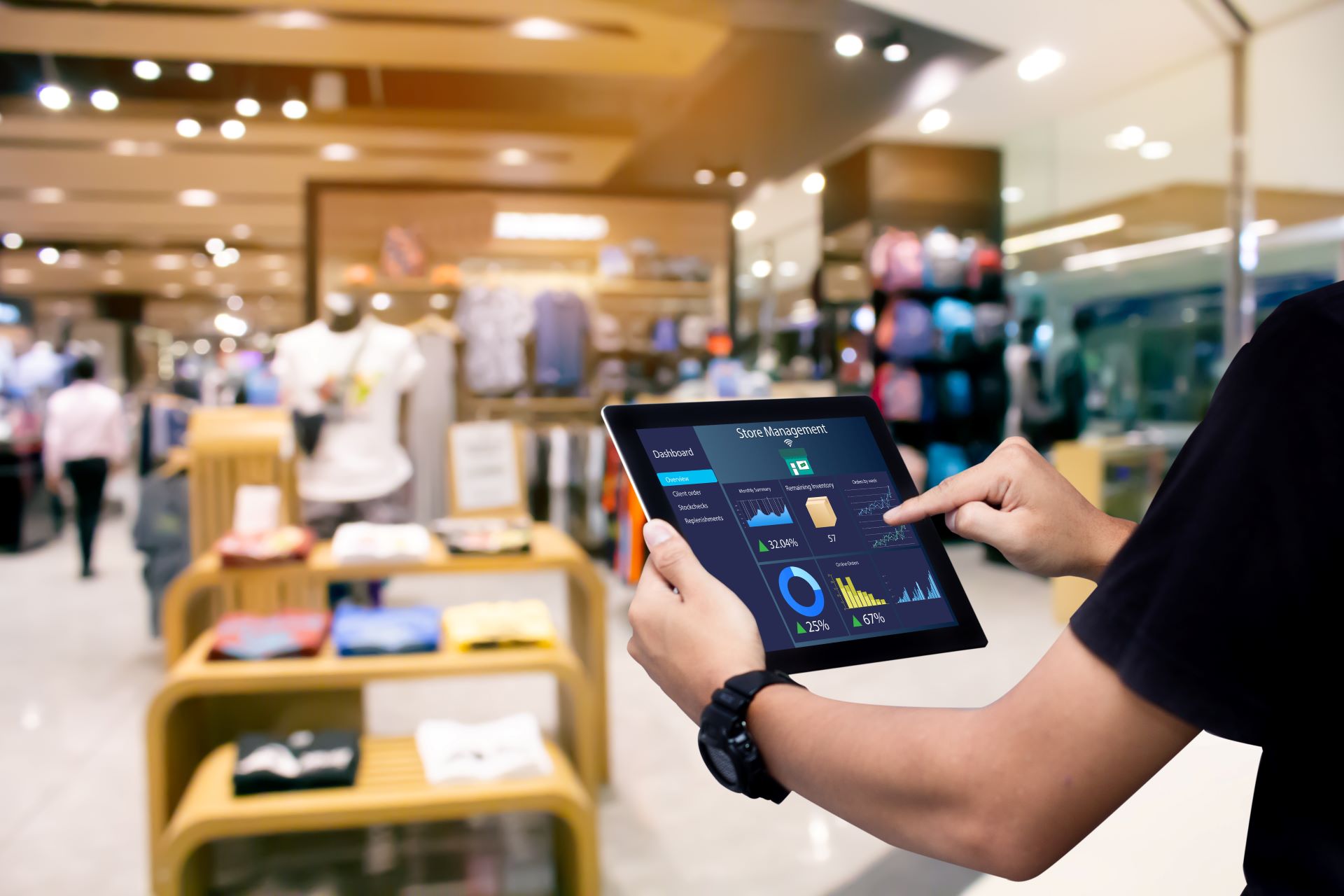
Utilise and optimise heavily and lightly frequented customer routes
Classifying customer paths provides information about areas with high cross-selling potential. In addition, retailers can use their knowledge of customer paths to display products with high profit margins in particularly high-traffic areas. The data from route analyses can also be used for negotiations on shelf placement, advertising subsidies and secondary placements. This is because highly frequented customer routes and prominent locations in a store strengthen the retailer's negotiating position with manufacturers. In addition, intelligent route guidance always influences whether customers are happy to return.
When evaluating data, customer paths with low traffic also play an important role in further optimising the location. This is because there are classic customer paths and sales areas that are generally less frequented. Identifying these areas raises two important considerations: Firstly, retailers need to find out how they can make these sales areas more visible. Secondly, they must decide which products should be presented in these sales areas. These findings can then be used to derive important measures to optimise customer guidance and increase sales.
Crosscan as a partner for systematic route analysis
Walkway analyses in retail help to better understand customer behaviour, optimise routing and increase sales. A store should invite customers to linger. But it should never give the impression of being overwhelmed by products or unnecessarily cramped. Data from walkway analyses helps with decision-making.
Retailers should leave nothing to chance if they want to be successful in the long term. After all, customer needs change rapidly over the years. A systematic walking route analysis is the best way to identify these changes. Crosscan is happy to help you implement this.
More than 1.000 brands and companies
trust in Crosscan.
Do you have any further questions about walkway analysis and visitor frequency measurement in the context of evaluating retail analytics data?
Please feel free to contact us for further information – we look forward to hearing from you!