Retail Analytics for Shopping Centers
Visitor flow analyses, data and KPIs from retail analytics reveal untapped potential and form the basis for successful concepts for the digitalisation, restructuring and reorientation of shopping centres.
Analysis and maximisation of visitor counts
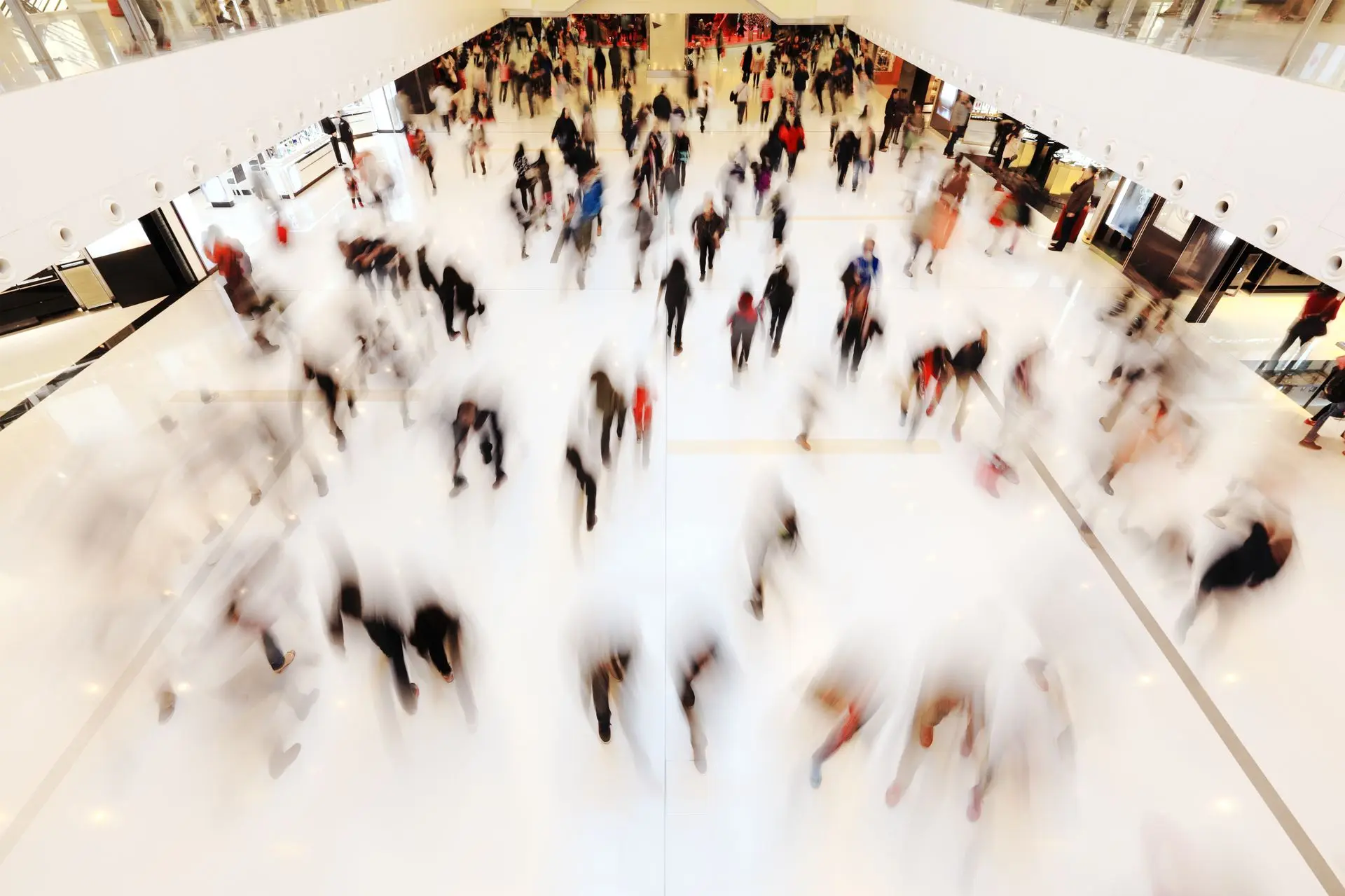
Shopping centres and malls are the biggest shopping magnets all year round, as they offer numerous shopping opportunities in a compact area, regardless of the weather. Additional promotions and events further boost visitor numbers and offer visitors a unique shopping experience. In order to manage events and advertising measures as successfully as possible, it is essential to be able to evaluate visitor flows at entrances and exits and in the centre's walking areas.
With Crosscan solutions for visitor frequency measurement, you always know how many people have entered or left the centre at what time and through which entrance. The attractiveness of individual levels or areas, such as the food court or individual flagship stores, can also be evaluated. The results from the frequency measurements enable management to optimise advertising campaigns or even the routing through the centre, thus giving the resident shops the security of a well-frequented marketplace. Our powerful cloud-based reporting platform offers local and central centre management convenient evaluation options in various reporting intervals and visualisation forms and supports the efficient management of shopping centres.
Visitor frequency analyses for data-driven decisions
The collection and compilation of data from shopping centres is nothing new. However, shopping malls still have room for improvement when it comes to analysing visitor flows. This is because manually recording visitors and conducting manual customer surveys only ever provides an inaccurate snapshot. For example, they do not provide any information on how the layout of the shopping centre can be optimised. Manual data is also useless for grouping individual stores. It is also of limited use when it comes to letting vacant space or restructuring a shopping centre in general.
Retail analytics enables visitor frequency to be measured throughout opening hours. Retail analytics not only provides managers with information about the total number of visitors to shopping centres, but also allows them to record visitor frequency for individual floors, areas and stores. This insight enables them to optimise the tenant mix and marketing measures.
Retail analytics is therefore the right tool for analysing low- and high-traffic areas and routes in shopping centres. Blind spots and dead ends in particular have a negative impact on visitor flow. Architecturally, they are often unavoidable and predetermined. In addition, vacant spaces damage the image of a shopping centre. That is why managers go to great lengths to keep vacancy rates low. With data from retail analytics, prospective tenants can be provided with relevant key figures to help them make their decision.
Since shopping centre customers prefer to move horizontally rather than vertically, increasing visitor frequency on upper floors is an ongoing challenge. In addition to adequate infrastructure with escalators and lifts and an open design of access areas, there are other measures that can be taken to increase the attractiveness of each floor. Retail analytics is the right tool for analysing weak points and making each floor attractive.

Analysis of demographic characteristics by age and gender
Visitors to shopping centres come in all ages, genders and purchasing behaviours. Retail analytics provides insight into the demographic structure of visitors. With this knowledge, marketing measures can be tailored to specific target groups.
It is also possible to automatically and systematically record the number plates of vehicles in your own car park. This allows you to determine the catchment area of visitors, which forms the basis for regional advertising measures.
Analysis of walking routes through continuous tracking
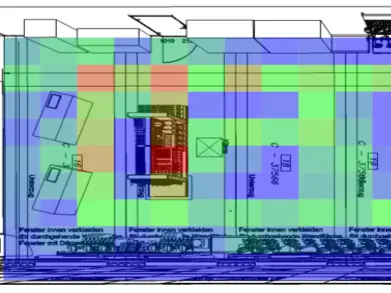
As part of customer analysis, it is extremely important to continuously record typical walking routes in order to understand customer behaviour on the sales floor. Retailers can use this data to implement appropriate optimisation measures. If retailers know the main walking routes, they can position product groups in a targeted manner to increase sales.
It also makes sense to deploy more staff to provide advice in these areas. To encourage more customers to visit areas that have been less frequented in the past, retailers can use the analysis to adjust the layout, lighting and signage.
Optimisation of energy costs
Due to constantly rising energy costs, this part of the operating costs is becoming increasingly important for both the centre operator and the retail partners in the centre. Given the sometimes enormous volumes of air that are circulated in a centre, reductions in the single-digit percentage range result in significant cost savings.
Crosscan's visitor frequency measurement systems track in real time how many people have entered or left a centre at what time and through which entrance. The occupancy monitoring system calculates the number of people in the centre in real time and transmits this information to the air conditioning/ventilation control system. This helps to avoid unnecessary peak loads by dynamically regulating the ratio of fresh air to recirculated air based on visitor numbers.
Implement digital visitor analytics
Crosscan's retail analytics visitor flow analyses, data and KPIs reveal untapped potential, providing the basis for successful developments and concepts for the digitalisation, restructuring and reorientation of shopping centres.
More than 1,000 brands and companies
already trust in Crosscan.
Do you have any further questions about data-driven visitor analysis in shopping centres and how you can use it to make informed decisions?
Please feel free to contact us for further information – we look forward to hearing from you!