Data is becoming increasingly important in retail. With 3D sensors, retailers can automatically collect this important data on the sales floor throughout opening hours. AI-supported systems make it possible to combine it with other business data and analyse it together. AI and machine learning are also important building blocks for developing new shop concepts and optimising existing sales areas. Large retail companies and innovative retailers are already investing heavily in new technologies and pioneering new ideas to remain competitive.
Retail trend: shopping in smart stores
Smart stores without cashiers have been experiencing an upswing for a few years now. The big advantage of smart supermarkets is that they can operate in previously unfavourable locations and at unfavourable opening hours. This is because the personnel costs for retailers are significantly lower than in conventional shops and branches with cashiers.
There are many different types of smart stores. Smart vending shops are similar to the widely available snack vending machines, where customers select the goods they want via a touchscreen. However, vending shops offer a much wider range of goods and are often designed as walk-in solutions. Customers pay directly at the machine.
With the smart walk-in concept Scan & Go, customers scan the selected goods themselves. Products can be recognised using their own smartphone, a hand-held scanner or a smart shopping trolley. In smart shopping trolleys, sensors, cameras and built-in scales identify the products and their prices. Customers can also receive personalised product recommendations on a display, which are determined by AI based on their shopping basket and purchase history.
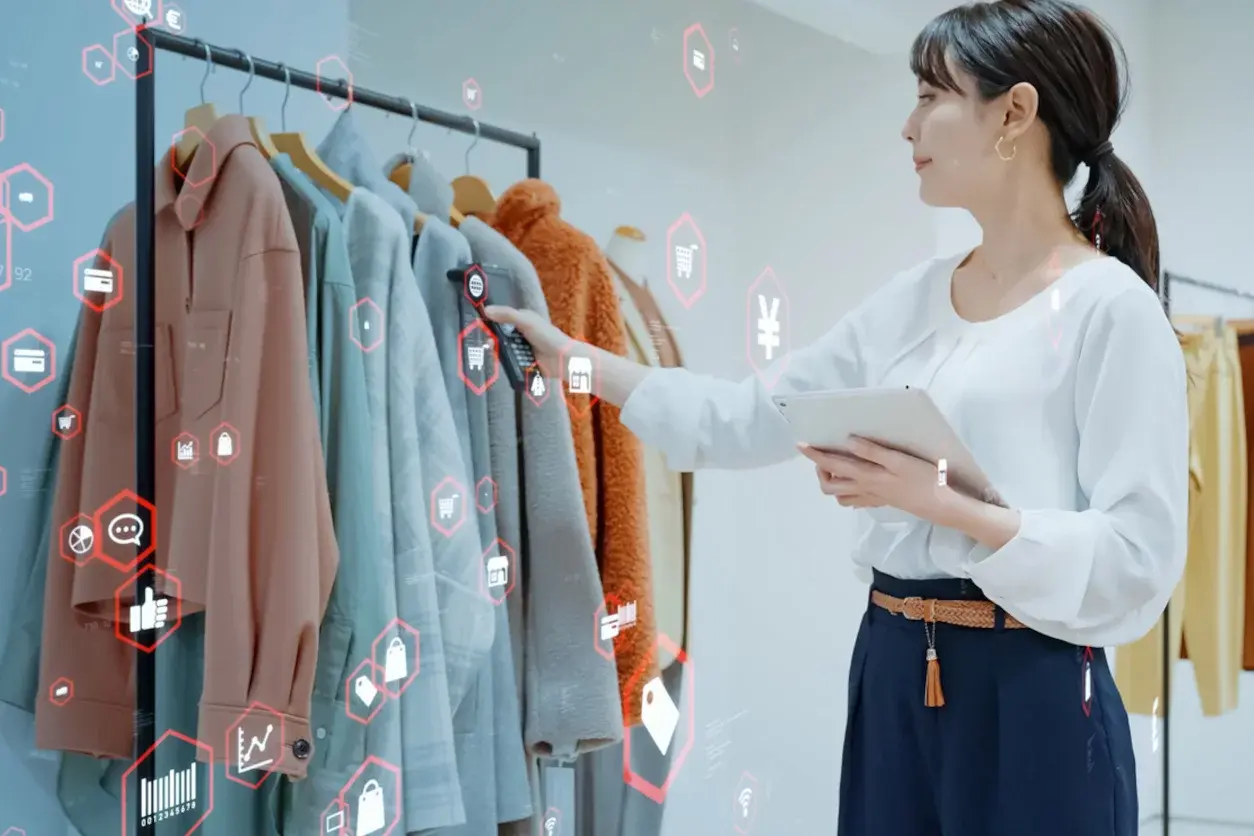
The use of a smart store is only possible if customers clearly identify themselves beforehand. There are various procedures for this, which may also include age verification. When leaving the smart store, the total price is debited contactlessly from the customer's account or customers pay by mobile. Alternatively, there are smart stores where customers scan their goods at self-checkouts at the end of their shopping trip and pay by mobile or card.
Even more revolutionary technology can be found in closed robot boxes. In these smart stores, customers select their goods via a terminal. AI-controlled robots pick the desired goods and deliver them to the dispensing station. This completely eliminates the possibility of theft.
From the customer's point of view, it is not only the speed of shopping and payment that is crucial in smart stores. User-friendliness and functionality are equally important factors. Retailers face the challenge of continuously supplying smart stores and keeping goods available. This is because most smart stores have only limited storage space.
Use cases and benefits of artificial intelligence in retail
State-of-the-art 3D sensor technology and image recognition provide important data on customer behaviour, and AI data analysis leads to efficient business decisions. This is particularly true when it comes to evaluating inventory, product placement and pricing. The use of AI gives managers more time for specific employee management and strategic tasks.
Artificial intelligence makes it possible to analyse very large amounts of data and respond appropriately to changes in real time. When it comes to staff scheduling, AI-supported systems take into account purchasing behaviour, the number of customers at certain times, the weather, usual sick leave, special events and employee preferences. Retailers use artificial intelligence to automate this time-consuming routine task, ensuring that sufficient staff are available in the right place at the right time.
AI systems recognise specific patterns based on customer purchasing behaviour, interaction with goods and other data. Retailers can use the results to design their product ranges and product placement. This makes it easier for them to see how changes to the product range and placement affect sales and profits. In addition, special 2D cameras can be used to detect age and gender, allowing target group reach to be assessed as part of advertising effectiveness testing. This makes it possible to check whether the product range or special promotional areas at the POS are reaching the desired customer base with the product offering.
In all branches and shops, AI can detect theft in combination with 3D sensors and cameras. AI algorithms detect irregularities in real time and automatically inform staff. These irregularities can relate to suspicious behaviour, failure to scan items, operating errors or non-payment. This enables retailers to reduce shrinkage associated with theft.
Data as the basis for change
Artificial intelligence and machine learning have a wide range of applications in retail. AI algorithms help to further optimise the shopping experience in smart stores, shopping robots, product placement and staff scheduling. In the future, many shops, branches and shopping centres will combine smart applications. Data from the sales area and industry benchmarks form the basis for the use of technological infrastructure and the development of new retail concepts. Crosscan will be happy to advise you on how to use data from 2D and 3D sensors to make better business decisions and deploy AI-based systems in a targeted manner.
Are you ready for the adventure of digital transformation and retail analytics?
Let us turn your vision into reality. Contact us today to get your brand on the path to data-driven management of your visitor areas.
Crosscan Data Insights Blog
Check out our other blog articles to learn how data-driven insights are transforming brick-and-mortar retail and helping to analyse visitor areas.