Length of Stay Analysis
The dwell time indicates how long a visitor or customer stays in a shopping centre and is often measured as part of customer flow studies or permanent flow path analyses.
Comparing the dwell time for the total area or individual sales zones at different times serves to check the acceptance of the offer and the success of optimisation measures.
Consumer shopping behaviour is characterised by various dimensions. These include, for example, shopping times, shopping frequencies, preferred product groups or dwell times. Visitors with a long dwell time are usually positive for retailers. They want to test products, discover the variety of the product range, talk to staff or do all of the above and more.
A longer dwell time is therefore a strong indication that visitors are willing to make a purchase. Dwell time measurement helps retailers analyse the dwell time of their visitors as an indicator of acceptance.
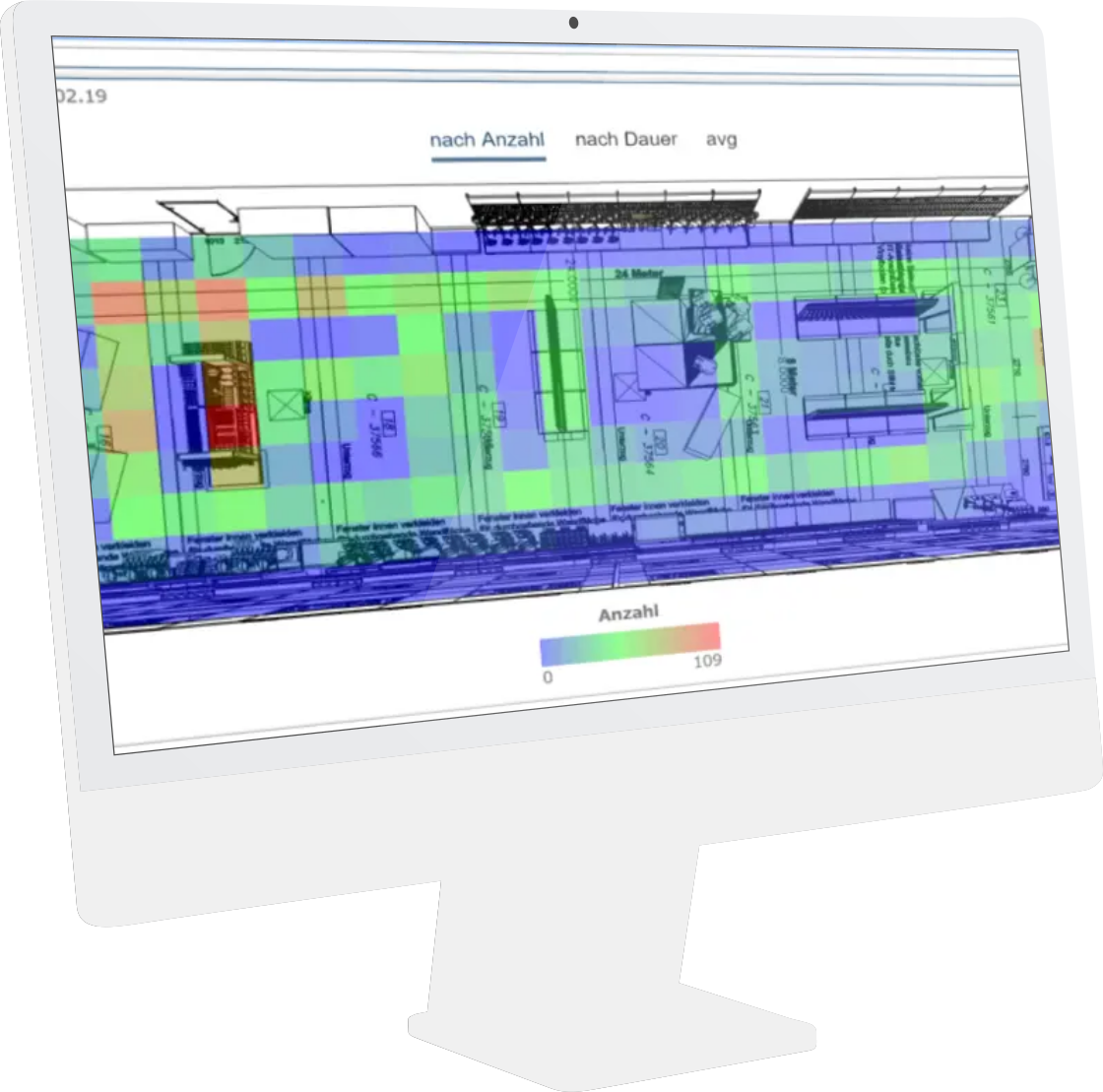
Evaluate walking routes and dwell times down to the square metre level
- Data-based heatmaps for all area sizes
- Detect Hotspots / Cold spots
- Variable data evaluations: heat maps, tables, graphics
- No on-site server hardware required
- 100% compliance with the GDPR
- In combination with the retail analytics data, you will receive additional key figures for your in-store tracking.
Dwell time as an indicator of a positive shopping experience
The dwell time indicates how long a visitor or customer stays in a shopping centre. Dwell time is often measured as part of customer flow studies or permanent flow path analyses. Comparing the dwell time for the entire area or individual sales zones at different times serves to check the acceptance of the offering and the success of optimisation measures. Dwell time measurement thus generates regular control variables for managing a sales area..
After all, retailers have an interest in increasing the amount of time their visitors spend in their stores. The average length of stay is, after all, an indicator of a positive shopping experience. There is a positive correlation between length of stay and sales per purchase: the longer visitors stay in a sales area, the more they buy. As is so often the case, however, it's the details that matter. For example, a confusingly designed shop floor tends to cause more walking than is absolutely necessary, which can also increase dwell time. Waiting time at the checkout can further increase the time spent on the sales floor, without this waiting time alone leading to higher sales.
Knowing the average dwell time also helps with specific staff deployment planning. If high visitor numbers are combined with an above-average dwell time, the quality of advice can only be guaranteed by having sufficient staff. Too few staff always has a negative impact on customer satisfaction. Visitors do not want to wait long for a sales assistant. In the worst case, they will leave the store. In addition, the analysis of the length of stay allows conclusions to be drawn about the number of cashiers required.
Technologies for dwell time analysis
Continuous data collection and analysis is the most normal thing in the world for retail companies. However, there are some areas that have been neglected up to now. These often include the analysis of customer behaviour on the sales floor. Retail analytics can help here with the right technologies and intuitive reporting platforms. This is because dwell time is no longer measured manually through observation, but automatically by cameras and appropriate analysis software.
A web-based reporting platform provides a visual evaluation of dwell time measurement, similar to a heat map. Alternatively, raw data can always be used to integrate and evaluate it in existing software. Additional services for professional management of the technology can be used by the customer in a semi-automated manner via tools or carried out by us. The analysis then allows the dwell time for times of day, days of the week or seasons to be recorded and typical patterns to be derived. Retailers can then draw their conclusions for the success of optimisation measures.
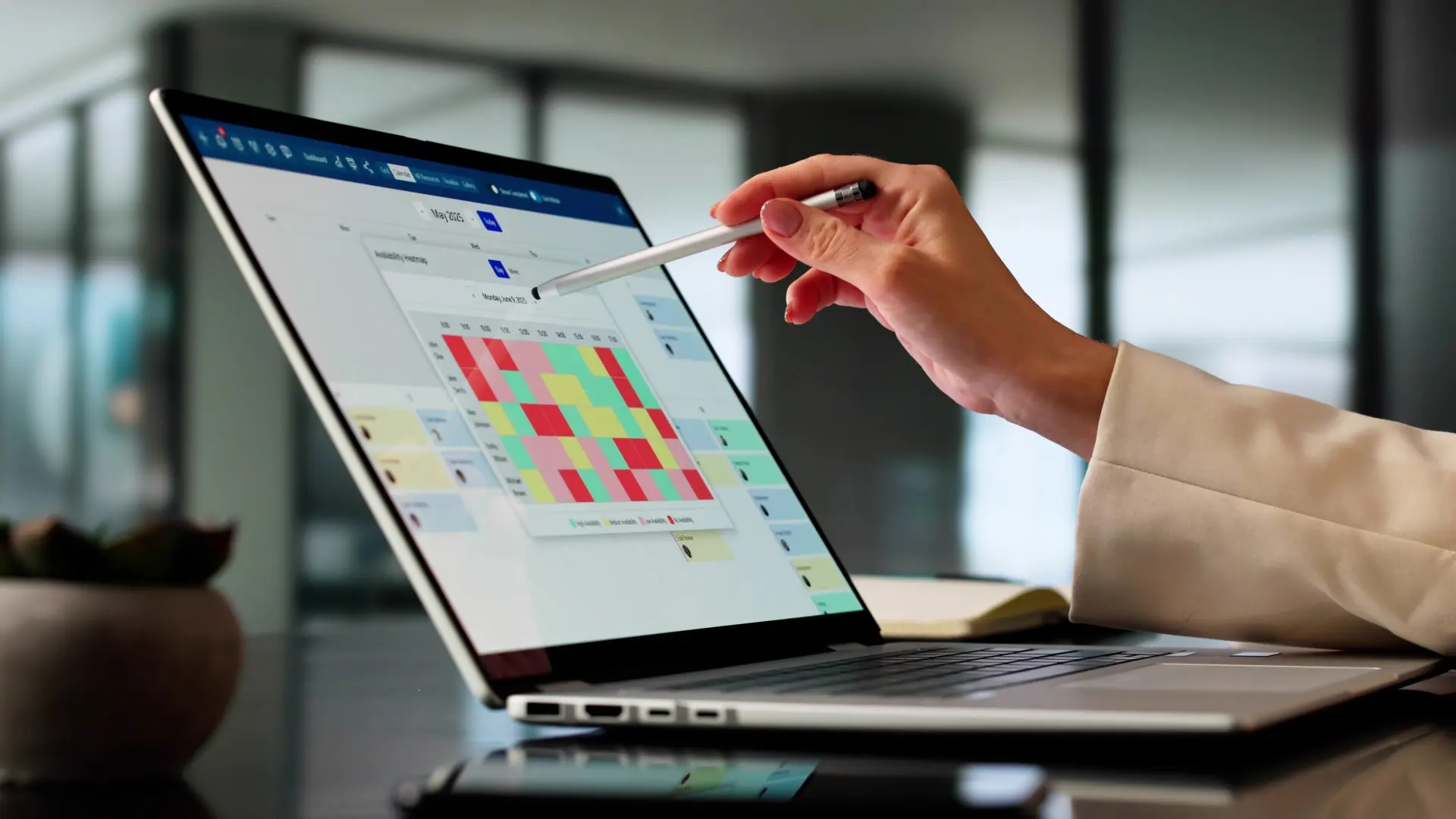
Positively influence the length of stay
A store is always in motion. This is because the store design, product range, merchandising and customer approach are constantly changing. These changes serve the purpose of providing a first-class shopping experience and, of course, increasing sales. You should not rely solely on your gut feeling when it comes to these changes. The right data is the perfect basis for validating decisions. When changes are made in the store, the length of time customers spend there is a good indicator of how effective they are.
In order to increase the length of stay, the quality of the visit must be improved. Visitors must want to come back. The shop design must be tailored to the respective type of business and the target group for a longer stay. This is because visitors have certain expectations and needs when entering a shop, which influences the length of their stay. However, it is not only the physical shop design that influences the length of time visitors stay, but also multisensory factors such as lighting, sound, smell and climate. Measuring the length of stay helps to analyse the effects of corresponding changes.
Crosscan as your partner for dwell time measurement
Customer-oriented retailers want to know more than just how many visitors become customers and how high customer turnover is. They are also interested in visitor behaviour throughout the entire sales area. Modern technologies enable visitor counting and the collection of average dwell time data. Crosscan is the ideal partner for finding the best system for measuring dwell time in your stores.
More than 1.000 brands and companies
already trust in Crosscan.
Do you have any further questions about dwell time analysis and visitor frequency measurement in the context of evaluating retail analytics data?
Please feel free to contact us for further information – we look forward to hearing from you!